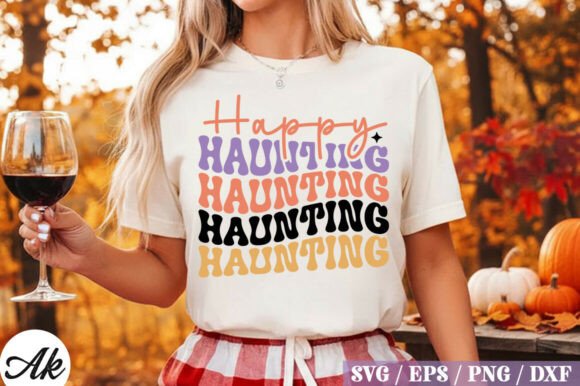
Happy Haunting Retro Design: A Designer’s Review
As someone who spends half their day staring at stitch charts and the other half troubleshooting tension issues on a domestic machine, I approach every new design file with a mix of curiosity and skepticism. We have all seen designs that look stunning in a digital preview but fall apart when the needle hits the fabric. That is why I take a practical, hands-on approach before recommending any asset to my network of crafters and small business owners. Today, I am evaluating Happy Haunting Retro Design, a graphic that promises a specific aesthetic for Halloween-themed projects.
This product falls under the broad umbrella of T-Shirt Designs and Graphics, specifically marketed as a retro Halloween SVG. The description suggests it is perfect for cutting and printing, but for us embroidery enthusiasts, the real question is how this translates from a vector line into thread. Does it hold up in a hoop? Is the detail level manageable for standard machines, or does it require industrial-grade precision? Let us dive into the practical realities of using this design in real-world scenarios.
First Impressions and Visual Personality
The term "retro" can mean many things in design, ranging from clean mid-century minimalism to chaotic 70s psychedelic patterns. From what I gather, Happy Haunting Retro Design leans into a playful, nostalgic vibe. It likely features bold shapes and a color palette that evokes vintage Halloween posters—think muted oranges, deep purples, and stark blacks. This mood is crucial because it dictates where the design will live.
In my experience, designs with strong retro personalities work exceptionally well on casual, everyday items. They do not demand the formality of a wedding guest book or the sleekness of corporate branding. Instead, they thrive in environments that celebrate creativity and seasonal fun. The layout appears to be balanced enough to fit comfortably within standard hoop sizes without feeling cramped, which is a significant plus for home embroiderers who may not own large commercial frames.
Real-World Application: Where This Design Shines
To truly understand the value of an embroidery file, we must imagine it on a finished product. I often visualize these designs on specific garments to gauge their potential appeal. For Happy Haunting Retro Design, my immediate thought is a custom embroidered tote bag. There is something inherently charming about carrying a reusable bag with a whimsical, vintage-inspired Halloween motif. It signals personality without being overly aggressive.
Beyond totes, this design has strong potential for sweatshirt embroidery. The chest pocket area or the left breast of a crewneck sweatshirt is a classic placement for smaller, detailed graphics. If you are running a small shop or selling on Etsy, this type of personalized gift appeals to customers looking for unique holiday wear. It also works beautifully as an embroidered patch, which can be ironed or sewn onto denim jackets, backpacks, or kitchen aprons. The versatility here is high, making it a valuable addition to your library of design assets.
Furthermore, consider the baby market. Baby embroidery often favors softer, cuter themes over scary ones. If the Happy Haunting Retro Design maintains a "happy" rather than "haunted" tone, it could be adapted for infant bodysuits or bibs. Parents love subtle nods to holidays that are safe for little ones. Similarly, for holiday embroidery projects like tea towels or pillow covers, the retro aesthetic adds a touch of warmth and nostalgia that fits perfectly in a autumnal home decor setting.
Technical Considerations and Stitching Challenges
While the visual appeal is promising, we must address the technical execution. Not all machine embroidery designs are created equal. When working with a graphic that originates as an SVG, there is always a translation layer involved. You need to ensure that the vector lines convert cleanly into satin stitches or fill stitches. If the design contains intricate details, such as fine text or tiny decorative accents, you must evaluate whether your machine can handle the density.
One area to watch closely is the stitch density. High-density areas can cause puckering, especially on lightweight fabrics like cotton tees or thin jersey knits. If you plan to use this for custom apparel, always test on scrap fabric first. Check how the thread colors interact with the base material. Retro palettes often rely on contrast; if you place a light-colored design on a dark fabric without proper underlay, the image may look muddy or incomplete.
Another critical factor is the hoop size. Ensure the dimensions of Happy Haunting Retro Design fit within your available hoop space. If the design is too wide, you may need to split it or resize it, which can affect the overall composition. Additionally, inspect the small details. Sometimes, curves that look smooth on screen become jagged or pixelated when stitched out, particularly if the digitization was done hastily. Look for clean corners and consistent spacing between elements.
Where to Use Caution
There are certain applications where this design might struggle. Avoid placing it on highly textured fabrics, such as heavy chenille or bouclé, unless you have extensive experience stabilizing difficult materials. The uneven surface can obscure fine details. Stretchy fabrics, like spandex blends used in activewear, also pose a risk of distortion. Without adequate tear-away or wash-away stabilizer, the design may stretch out of shape during stitching.
Curved surfaces, such as baseball caps, present another challenge. While possible, they require precise positioning and often multiple hooping attempts. If you are new to cap embroidery, stick to flat items like tote bags, pillows, or shirts until you are confident in your technique. Also, be mindful of products that will undergo frequent washing. Over time, even high-quality threads can fade or pill, so choose durable yarns if longevity is a priority for your finished product.
Business and Branding Implications
For Etsy sellers and craft business owners, the presentation of your product matters as much as the stitching itself. A well-executed Happy Haunting Retro Design enhances brand consistency. It tells your customers that you pay attention to detail and offer cohesive, themed collections. When creating printable mockups or digital embroidery file previews, ensure the lighting highlights the texture of the thread. This helps buyers visualize the tactile quality of the item.
Customer trust is built through professionalism. By testing the design thoroughly and providing clear care instructions, you reduce returns and negative reviews. If you are selling the digital file itself, make sure to clarify licensing terms. Can customers use the finished physical items for commercial sale? Are there restrictions on redistribution? Clear communication protects both you and your buyers.
Final Verdict
Happy Haunting Retro Design offers a charming, versatile option for those looking to add a touch of vintage flair to their Halloween projects. Its playful aesthetic makes it suitable for a wide range of items, from tote bag design opportunities to sweatshirt embroidery pieces. However, success depends on careful preparation. Always check the stabilizer requirements, test on scraps, and verify that the stitch density matches your machine’s capabilities.
If you are a creative entrepreneur or hobbyist seeking a reliable embroidery project that balances style with practicality, this design is worth considering. Just remember to inspect the small details and confirm that the final output meets your quality standards. With proper execution, it can become a standout piece in your collection of handmade goods.